
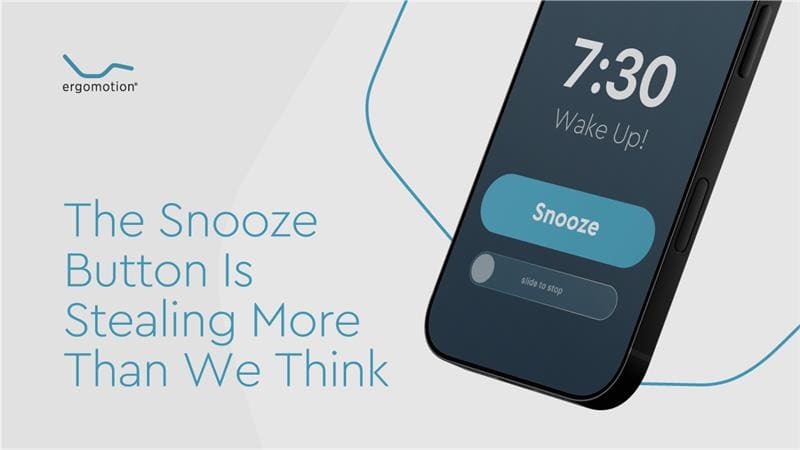
More than 55% of people worldwide don't wake up with their first alarm. Instead, we hit snooze.
On average:
• 2–3 snoozes every morning
• ~11 extra minutes in bed
• For heavy snoozers: 20+ minutes daily
That might not sound like much… until you zoom out. That's hours of fragmented sleep every month, right at the most critical transition of your day.
Why Does This Matter for Sleep & Performance?
When we hit the snooze button, our brain begins a new sleep cycle that it can't complete. This triggers sleep inertia — that grogginess, slower thinking, lower focus, and mood dip that can last 30–90 minutes after waking.
The result?
• You wake up more tired, not less
• Your stress response increases
• Cognitive performance drops
• Energy and motivation dip early in the day
Ironically, snoozing is often a signal, not a solution:
👉 Poor sleep quality
👉 Inconsistent routines
👉 Misaligned wake-up times
👉 Accumulated sleep debt
The Bigger Picture
Better sleep isn't just about how long you sleep, but how you wake up. Improving sleep quality, consistency, and wake-up habits can directly boost:
• Focus and decision-making
• Emotional regulation
• Productivity
• Overall well-being
Small habits. Big consequences.
Maybe the real question isn't “Why do we snooze?" But "What is our sleep trying to tell us?"
Elevate your business with Ergomotion®.
.png)